
Personalized Wood Care to Transform Every Space
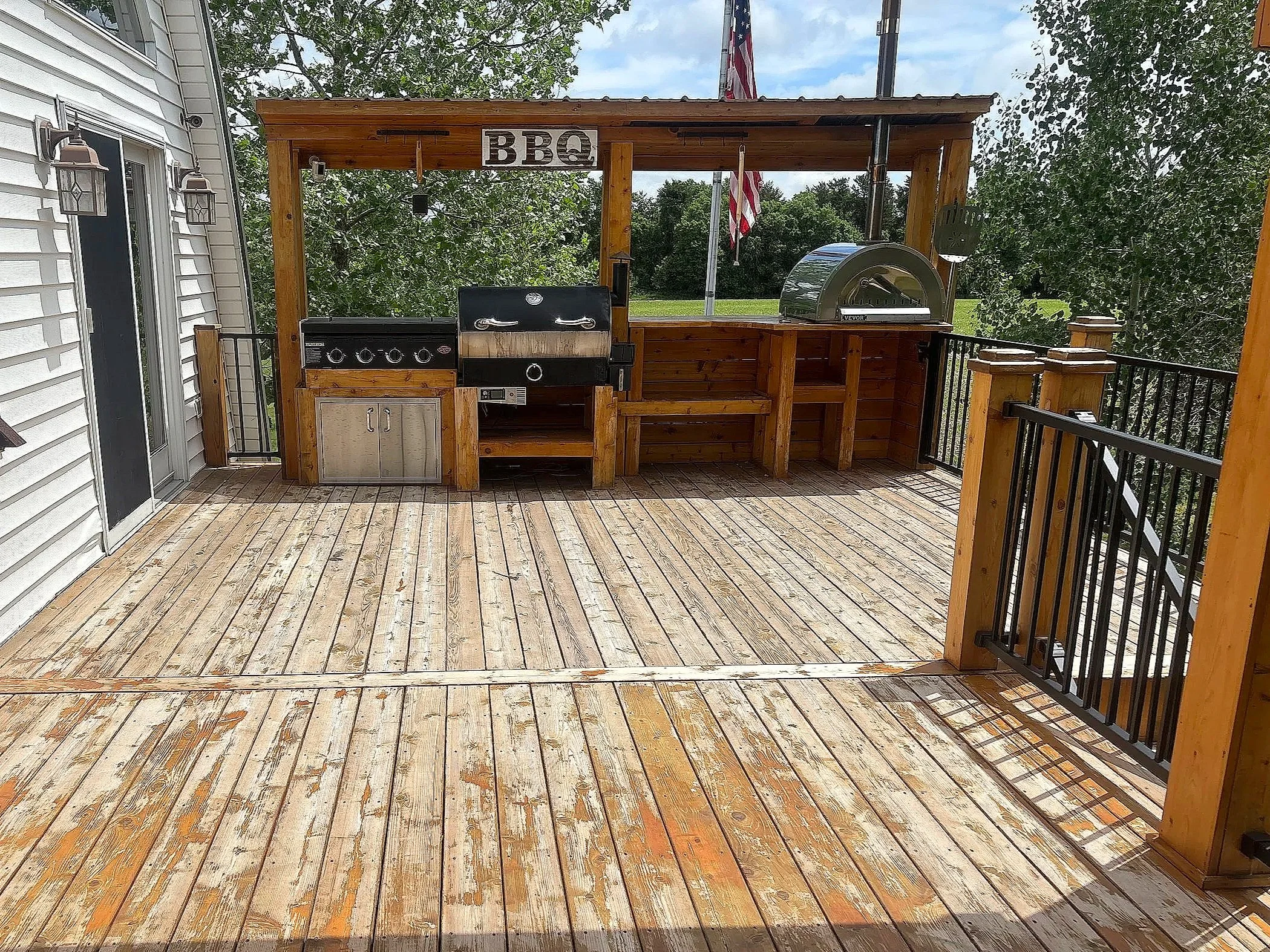
When to Wash and When to Strip
Unless we’re staining new wood or wood that’s only a year or two old, we at least give it a wash.
Our 3-step chemical wash procedure is great for removing moss, mildew, and the old, gray look that wood takes on with age. After a successful wash, old wood can almost look like new and is well-prepared to receive the fresh stain.
In cases where a deck or fence has an old, failing product, there’s two options for how to address the project. If the old product could be removed by using a stripping agent in our wash process, we can mostly treat the project the same as a wash. However, instead of washing it once, we may have to go over the structure multiple times to remove as much product as possible, after which we may still have to do intensive sanding to remove some remaining product before staining.
If the product would be particularly difficult to remove, stripping it all can become a very tedious option. In these cases, instead of removing the old product, it can make more sense to give the deck a simple wash and then apply the same product to the deck that it already has.
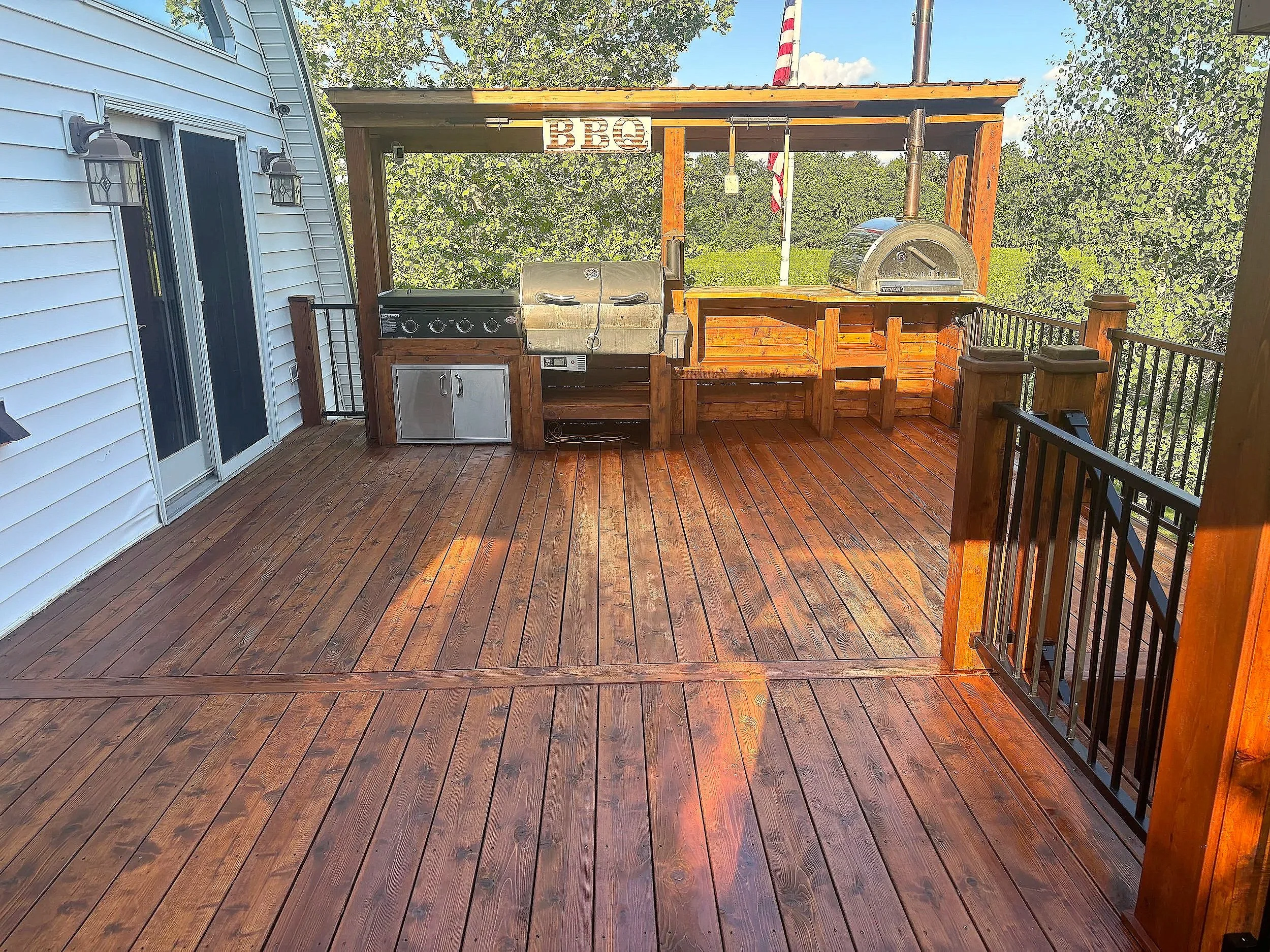
Sanding After a Wash or Strip
Generally speaking, a new deck doesn’t require any sanding, however if it has started splintering in any areas it can be a good idea.
But any time we wash or strip a deck, the pressure washing and chemical treatment will create some splintering across the deck that will necessitate a thorough sanding. In this case, we plan to sand the deck after it has dried on the day we come to stain it.
On other projects such as fences or pergolas, hardly any sanding is required. Only areas that have significant splintering are worth sanding.
After sanding a deck, we blow the sawdust off with a leaf blower and get to staining!
Applying Stain: Brush or Spray?
Choosing whether to brush or stain a project is pretty straightforward. We spray fences and treat every other project by hand.
Though spraying decks may be more time efficient in some cases, applying by hand is worthwhile because it aids in stain absorption and helps to produce a nice, even finish.
When it comes to fences, hand application may be best, but is impractical in practice. To get the best of both worlds, we keep an eye on how the stain is absorbing into the fence, and where necessary we back brush to help with stain absorption and to even out the finish.
When spraying, we also take precautions to negate overspray by using painter’s plastic and protective tarps to cover house siding and miscellaneous backyard objects and plants, and whether we brush or spray, we take care to clean stain off of any unintended surfaces stain may get on.